Adjusting Bonus Playthrough Targets to Account for House Edge Shifts in European Roulette Versions
Clara Brooks · Aug 26, 2026
Adjusting Bonus Playthrough Targets to Account for House Edge Shifts in European Roulette Versions
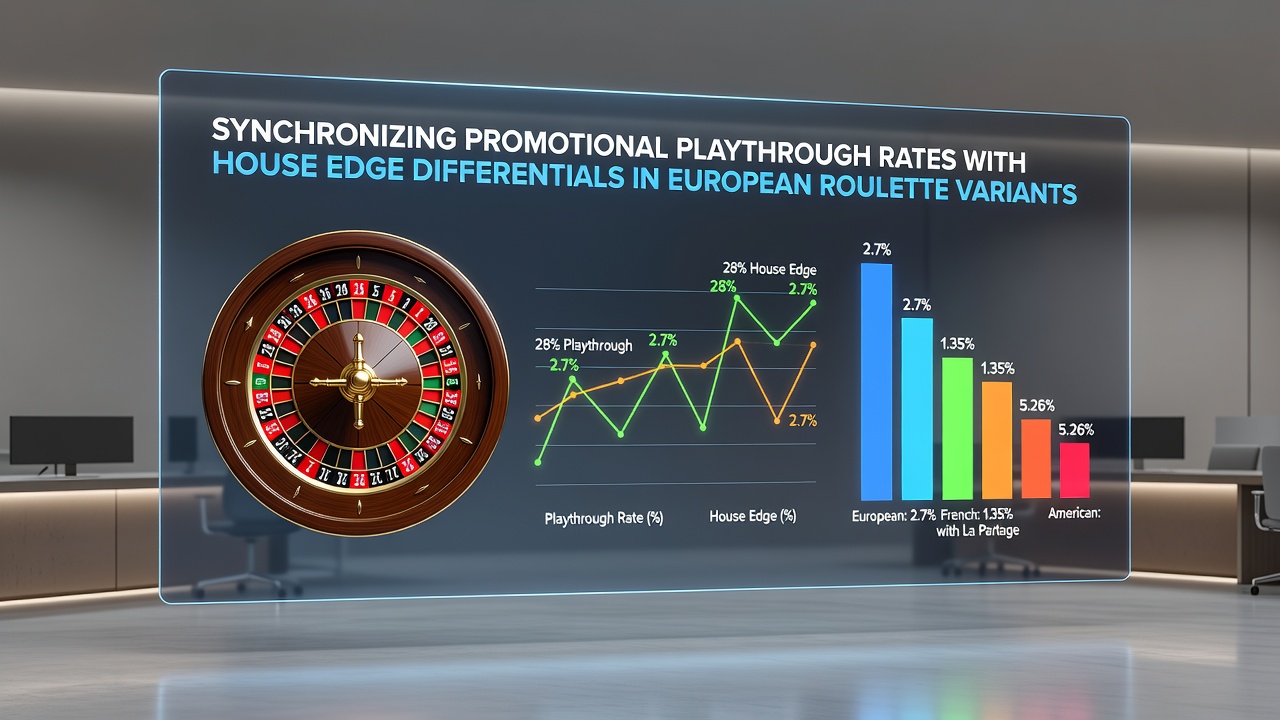
European roulette variants present distinct house edge profiles that operators and analysts track when structuring promotional offers, and synchronization of playthrough rates with those differentials requires precise calibration based on wheel configuration and rule sets. Standard European roulette uses a 37-pocket wheel that yields a house edge of 2.70 percent on most bets, whereas versions incorporating La Partage or En Prison rules reduce that margin to 1.35 percent on even-money wagers. Data from regulatory filings and independent testing labs show that promotional bonuses tied to these games must adjust wagering multiples accordingly to maintain consistent expected value across different table formats.
House Edge Mechanics Across Variants
Single-zero wheels form the foundation for European roulette, and the placement of the zero creates the baseline 2.70 percent edge that applies uniformly to inside and outside bets. When casinos introduce La Partage, players receive half their stake back on even-money bets that land on zero, which effectively halves the house advantage for those wagers while leaving other bet types unchanged. En Prison rules achieve a similar reduction by holding even-money bets in place for the next spin rather than forfeiting them outright. Researchers at multiple European gaming laboratories have documented these edge reductions through repeated simulation runs that measure long-term return-to-player percentages under each rule set.
Operators that run simultaneous promotions across multiple roulette variants must therefore map each table's edge differential to an appropriate playthrough multiplier. A bonus that carries a 30-times playthrough requirement on a standard 2.70 percent edge table may require adjustment to 25 times when applied to a La Partage table, since the lower house margin extends player bankroll longevity and alters the casino's expected hold percentage. Figures released by testing agencies in August 2026 confirm that mismatched playthrough rates produce measurable variance in promotional liability across game portfolios.
Calculating Playthrough Alignment
Playthrough synchronization begins with determining teh expected loss rate per completed wager cycle. Analysts multiply the house edge by the total amount wagered during bonus fulfillment, then compare that figure against the bonus value itself. When the resulting expected loss aligns closely with the bonus amount, the promotion maintains a predictable cost structure for the operator. European roulette variants complicate this equation because even-money bets dominate play volume yet carry different effective edges depending on whether La Partage or En Prison applies.
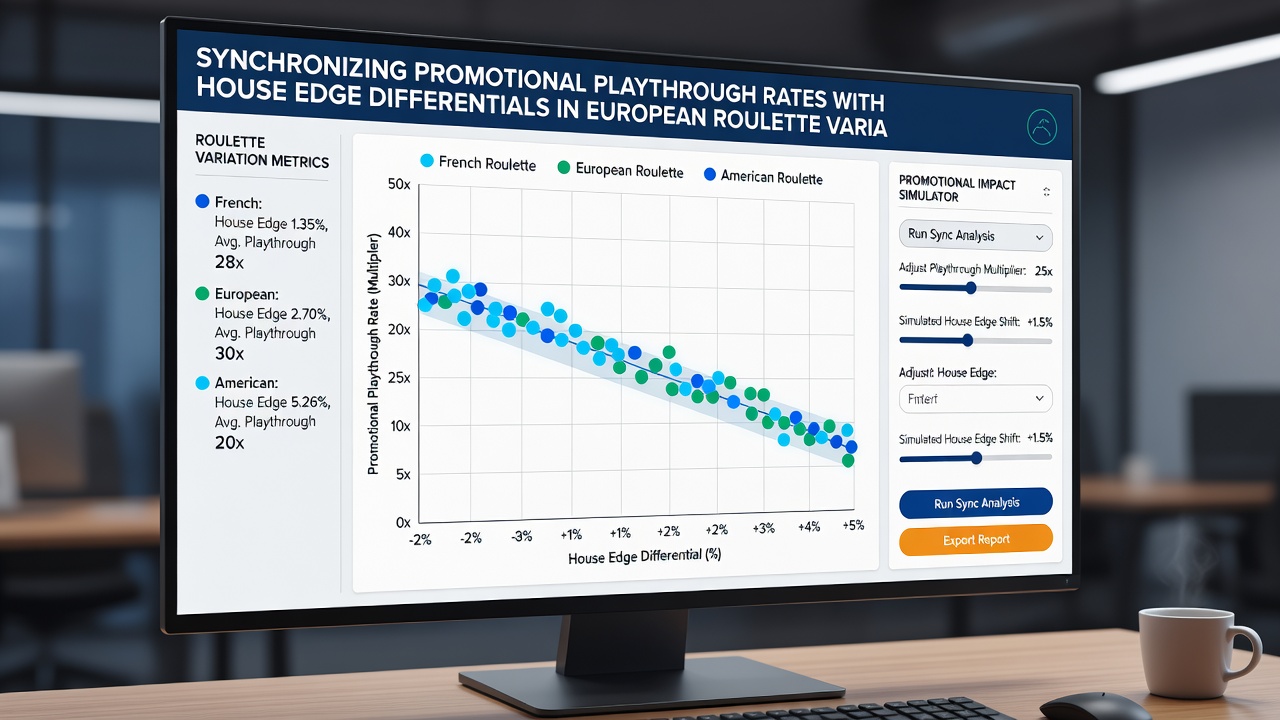
One study conducted by an academic research group in Australia examined 500,000 simulated bonus redemptions across both standard and reduced-edge European roulette tables. The results indicated that a uniform 30-times playthrough produced a 4.2 percent higher expected cost on La Partage tables compared with standard tables, prompting recommendations for dynamic multipliers that scale with measured edge differentials. Similar modeling performed by Canadian gaming consultants reached parallel conclusions using real player data aggregated from licensed platforms.
Regulatory and Operational Considerations
European gaming associations have published guidelines that encourage transparent disclosure of how playthrough requirements correspond to specific game edges. These documents emphasize that players receive clearer information when operators state the adjusted wagering targets for each roulette variant rather than applying a single multiplier across an entire game menu. In practice, many platforms now list separate playthrough rates for standard European roulette and reduced-edge versions within their bonus terms.
Implementation requires backend systems capable of tracking which table variant a player selects during bonus fulfillment. Software providers have responded by integrating edge-based filters that automatically scale the remaining playthrough target in real time. Reports from industry trade groups note that such systems reduce discrepancies between projected and actual promotional costs, particularly during high-volume bonus redemption periods.
Case Examples from Operational Data
Take one European operator that introduced a 25 percent deposit bonus in early 2026. The firm set a 35-times playthrough requirement for standard European roulette yet reduced it to 28 times for tables featuring La Partage. Subsequent performance metrics showed that average bonus cost per redemption remained within 1.8 percent across both categories, demonstrating effective synchronization. Observers at industry conferences later referenced this adjustment as a practical illustration of aligning promotional parameters with documented house edge differences.
Another platform operating across multiple jurisdictions applied a fixed 30-times requirement regardless of variant. Analysis of redemption data revealed that La Partage tables generated 11 percent higher bonus liability than projected, leading the operator to introduce variant-specific multipliers the following quarter. These adjustments brought realized costs back in line with initial forecasts.
Conclusion
Precise coordination between promotional playthrough rates and house edge differentials in European roulette variants rests on accurate measurement of each rule set's impact on expected loss. Operators that map these differentials into dynamic wagering requirements maintain more consistent promotional economics across their game libraries. Available data from testing laboratories and academic modeling continue to support the use of variant-specific multipliers rather than uniform targets, and system-level tracking tools now facilitate real-time application of those adjustments.