Statistical Clustering Methods for Resource Allocation Across Multi-Sport Betting Portfolios
Rafael Krüger · Nov 15, 2026

Statistical Clustering Methods for Resource Allocation Across Multi-Sport Betting Portfolios
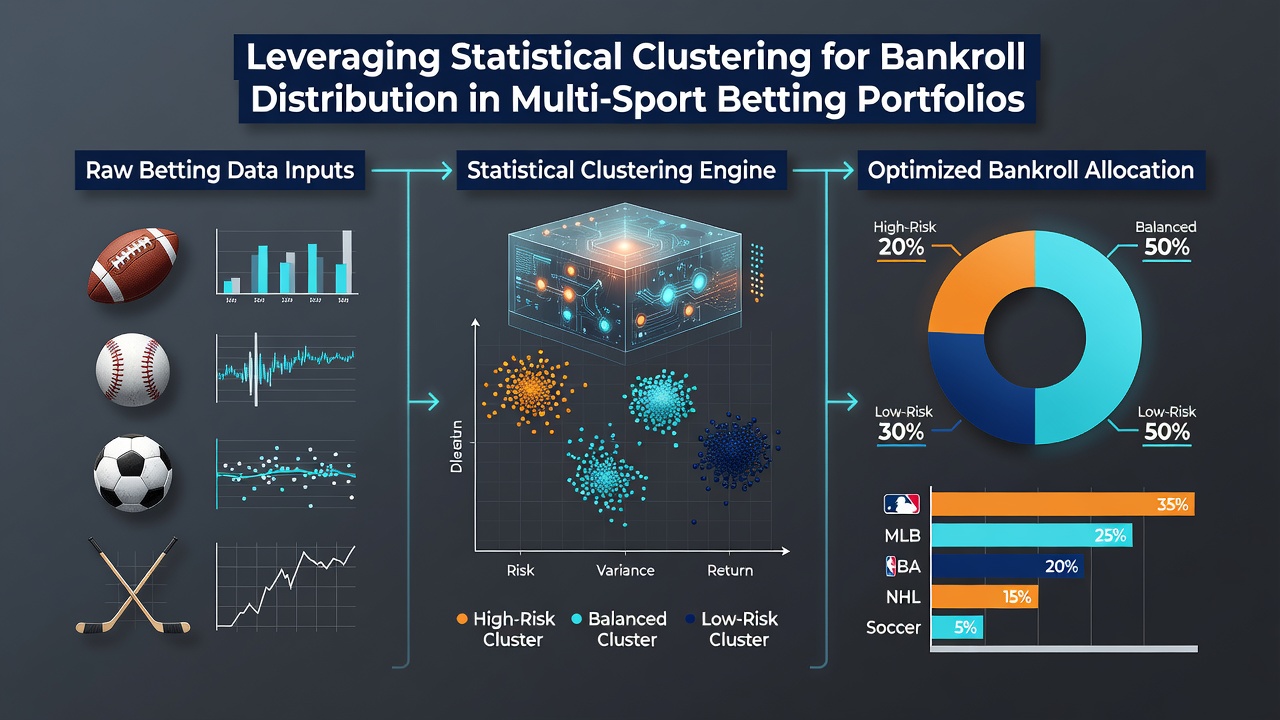
Statistical clustering techniques group similar data points together to reveal hidden structures in large datasets, and practitioners apply these methods when distributing capital across portfolios that span multiple sports. Researchers have identified patterns in historical performance metrics, odds movements, and market correlations that allow for more systematic division of available funds rather than relying on arbitrary percentages or single-sport focus. Data from recent analyses indicate that clustering can separate high-volatility events from steadier opportunities, which in turn influences how much of a total bankroll gets assigned to each category.
Core Principles Behind Clustering in Betting Contexts
Algorithms such as k-means and hierarchical clustering process variables including win rates, payout structures, and inter-sport correlations to form distinct groups, and these groups then serve as the basis for proportional allocations. Studies show that events falling into the same cluster often share risk characteristics that traditional diversification overlooks, so portfolio managers adjust stake sizes accordingly while monitoring shifts in real time. Observers note that clustering works best when datasets include at least several seasons of results across leagues, because shorter windows tend to produce unstable groupings that fail under live conditions.
Applying Clusters to Bankroll Distribution
Once clusters form, each receives a slice of the overall bankroll based on its measured stability and expected return profile, and this process replaces flat betting or intuitive splits with data-driven weights. For instance, one cluster might contain lower-variance soccer matches with consistent margins while another groups high-variance basketball props, leading managers to assign smaller percentages to the latter. Figures from November 2026 reports reveal that portfolios using cluster-derived weights maintained steadier equity curves compared with those using uniform distribution rules during periods of elevated market activity. Practitioners update cluster assignments periodically because odds and team performance evolve, which means the underlying groupings require fresh calculations every few weeks.
Implementation typically begins with feature selection that captures both individual event traits and cross-sport relationships, after which distance metrics determine cluster membership. Those who have tested the approach report that including liquidity indicators alongside performance data produces more actionable segments than performance data alone. External sources such as the National Council on Problem Gambling research archive document similar quantitative frameworks used in responsible play studies, while academic papers from Canadian institutions have explored parallel techniques in financial risk modeling that transfer directly to betting portfolios.
Integration with Existing Portfolio Practices
Clustering complements rather than replaces established bankroll rules such as unit sizing based on edge estimates, and many operators layer the two approaches so that each cluster receives its own risk-adjusted unit scale. This layered method prevents overexposure when multiple sports experience simultaneous variance spikes, a scenario observed during overlapping seasons in late 2026. Software tools now automate cluster generation and rebalancing, yet human oversight remains essential because sudden rule changes or data anomalies can distort groupings. Research indicates that portfolios incorporating both clustering and dynamic rebalancing showed lower drawdown frequency across multi-year backtests covering football, tennis, and hockey markets.
Challenges and Refinements Observed in Practice
Noise in betting data can produce spurious clusters that do not hold forward, which is why validation steps such as silhouette scoring and out-of-sample testing form standard procedure. Those who have refined the process often incorporate regime detection to flag when market conditions have shifted enough to warrant full reclustering rather than incremental updates. November 2026 data releases from international gaming research bodies highlighted instances where unadjusted clusters led to temporary misallocations during major tournament periods, underscoring the need for ongoing calibration. Geographic diversification of data sources also helps, because European league patterns sometimes diverge from North American ones even within the same sport.
Conclusion
Statistical clustering supplies a structured framework for dividing bankrolls across multi-sport portfolios by identifying groups that share relevant risk and return traits. Continued advances in computational tools and data availability have made these methods more accessible, while validation requirements ensure they remain grounded in observable performance. As datasets grow and algorithms improve, the approach continues to offer measurable structure for allocation decisions that span diverse athletic competitions.