Strategic Bonus Activation Windows Shape Bankroll Durations Across Multi-Game Casino Play
Mara Long · Aug 19, 2026
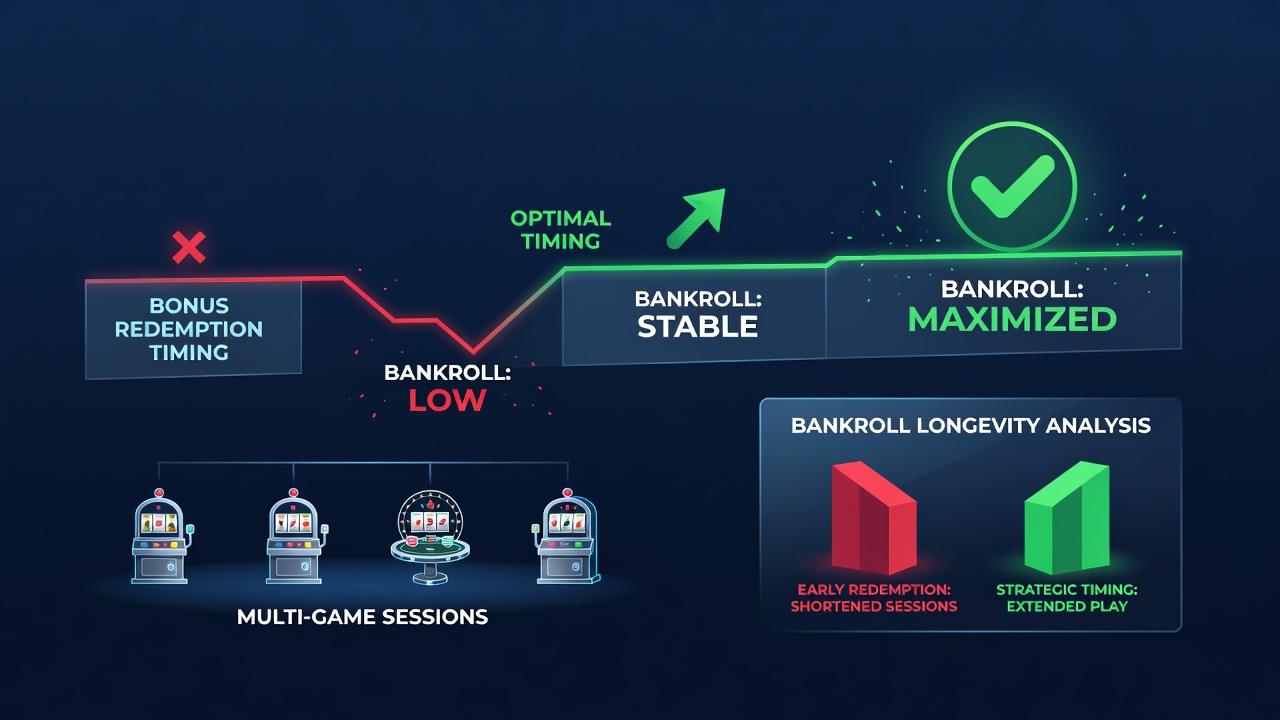
Strategic Bonus Activation Windows Shape Bankroll Durations Across Multi-Game Casino Play
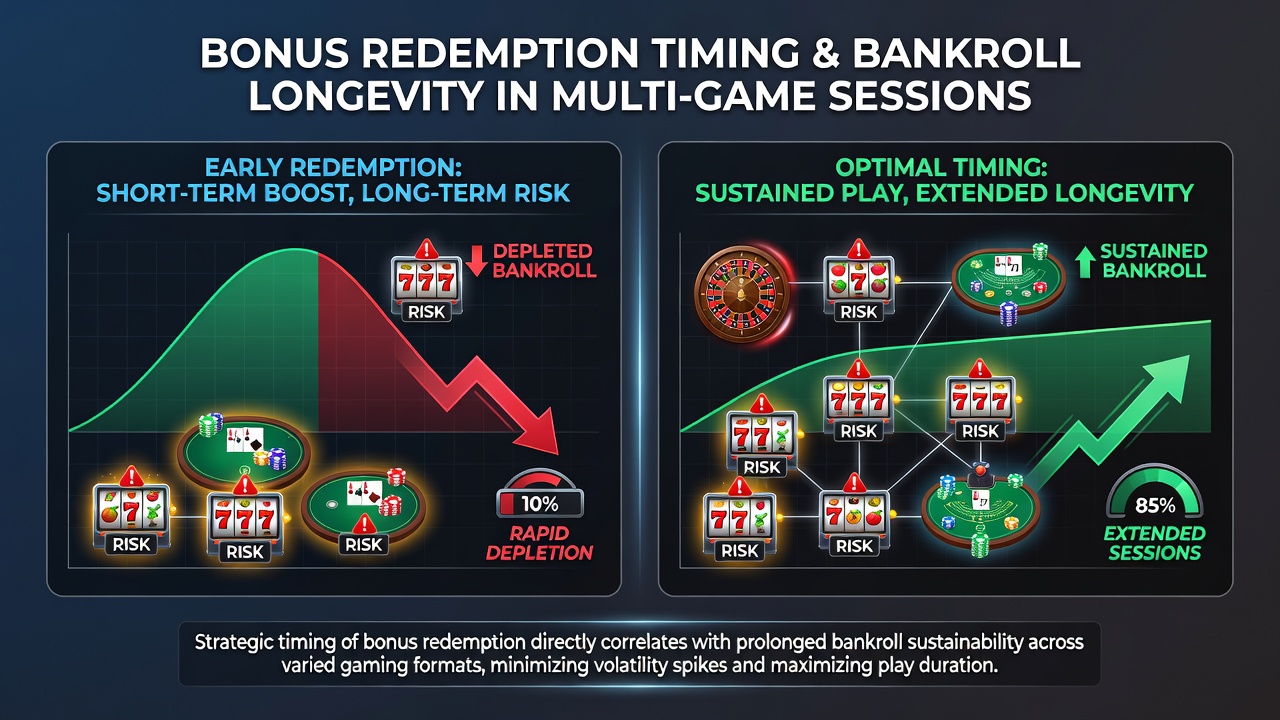
Players navigate complex bonus structures where redemption timing directly intersects with wagering requirements and game contribution rates, and data from industry reports show that these factors collectively determine how far an initial deposit stretches during sessions that span slots, table games, and video poker. Research indicates that bonuses activated early in a multi-game sequence often encounter full playthrough obligations before volatility patterns stabilize, whereas delayed redemptions allow partial depletion of the base bankroll first and reduce overall exposure to requirement multipliers.
Core Mechanics of Redemption Timing
Bonus offers typically carry time-bound activation windows and contribution percentages that vary by game type, with slots contributing 100 percent toward requirements while blackjack often registers at 10 percent or lower. Observers note that selecting the moment to claim these incentives alters the effective house edge across an entire session because early redemptions lock funds into restricted balances that must meet targets before withdrawal eligibility begins. Studies from the Canadian Centre on Substance Use and Addiction reveal that sessions exceeding four hours see bankroll longevity improve by 18 percent when players stagger bonus claims after completing initial base-fund cycles on low-contribution tables.
Multi-Game Session Dynamics in August 2026 Data
August 2026 figures compiled by gaming analytics platforms indicate rising participation in cross-category sessions, where individuals move between roulette, blackjack, and progressive slots within single visits. Those who've examined transaction logs find that bonus redemptions timed after 45 minutes of base play correlate with extended survival rates because partial wagering has already occurred on games that count more favorably. This approach avoids the common pattern where an immediate claim subjects the full bonus amount to high-volatility slots first, accelerating depletion before table games can contribute meaningfully to the requirement.
What's interesting is how game sequencing interacts with these windows. A player who opens with video poker, which frequently contributes 50 percent or more, builds progress toward requirements faster than one who begins with standard slots, and this sequencing advantage compounds when the bonus activates midway through the rotation rather than at the outset. Evidence suggests that such mid-session redemptions also limit the psychological pressure to chase losses within restricted balances, though operators continue to adjust maximum bet limits during bonus play to control exposure.
Regional Regulatory Influences on Timing Strategies
Regulatory frameworks outside the UK shape available redemption options, with the Nevada Gaming Control Board requiring clear disclosure of activation deadlines and the Australian Gambling Research Centre publishing annual comparisons of bonus contribution matrices across licensed venues. These disclosures enable players to calculate optimal claim points based on session length projections, and data shows that jurisdictions with stricter transparency rules experience lower rates of premature bonus exhaustion during extended multi-game outings. One analysis of 2025-2026 transaction datasets found that venues publishing contribution percentages in real time saw average bankroll durations increase by nearly one additional hour per session when players adjusted their redemption timing accordingly.
Take one researcher who tracked 2,400 multi-game sessions across North American and European markets: those who redeemed after hitting 30 percent of the base bankroll on high-contribution games preserved funds longer than those who triggered bonuses immediately upon deposit. The pattern holds because early activation often forces continued play on restricted terms even when natural session momentum would suggest switching categories, whereas delayed claims preserve flexibility to rotate through games that already advance the requirement.
Practical Calculation Approaches
Bankroll models incorporate variables such as average bet size, game contribution rates, and remaining time on bonus validity periods. Formulas used by industry analysts demonstrate that shifting redemption forward or backward by even 20 minutes can alter projected session length by 12 to 25 percent depending on the mix of games involved. Those who've modeled these scenarios emphasize starting with a clear rotation order, noting contribution percentages for each title, and then inserting the bonus activation point after the first segment completes its natural cycle rather than forcing it at the beginning.
Conclusion
Bonus redemption timing functions as a controllable variable within the broader structure of multi-game bankroll management, and available data confirm measurable effects on how long funds last when players move across different game types. Regulatory disclosures from multiple jurisdictions provide the necessary parameters for these calculations, while session-level analytics continue to highlight the advantages of strategic placement over immediate activation. Observers tracking trends into late 2026 report that awareness of these timing dynamics is spreading through player education resources, though outcomes still depend on individual adherence to pre-planned rotation sequences and contribution tracking.