Weather Records Meet Trap Data to Sharpen Lay Bet Choices in Evening Greyhound Fixtures
Rafael Krüger · Aug 17, 2026
Weather Records Meet Trap Data to Sharpen Lay Bet Choices in Evening Greyhound Fixtures
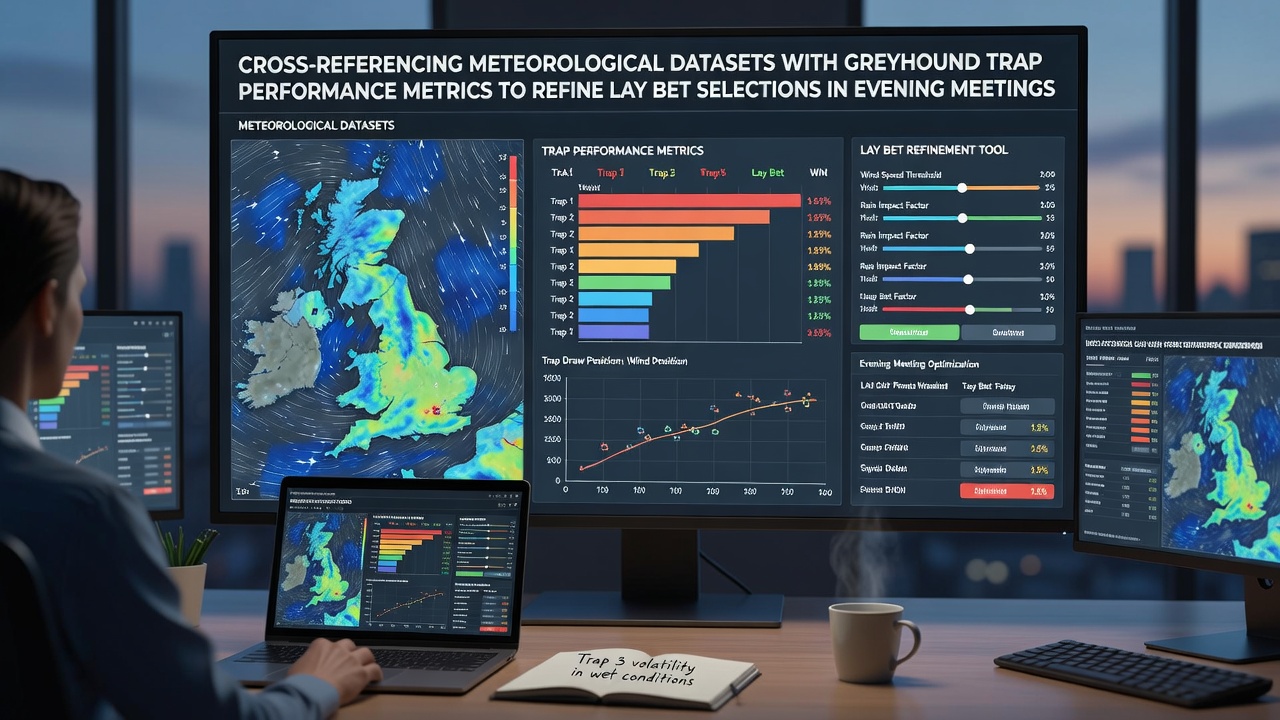
Evening greyhound meetings present distinct variables because temperatures drop, humidity rises, and wind patterns shift after sunset, all of which alter track surfaces and canine performance. Observers note that cross-referencing meteorological datasets with trap-by-trap speed and position records allows analysts to adjust lay bet selections when conditions favor certain inside or outside runners over others.
Data from national weather services such as the National Oceanic and Atmospheric Administration provide hourly readings on precipitation, wind speed, and temperature that racing statisticians align with sectional times recorded at venues across the UK, Ireland, and Australia. Those alignments reveal patterns, for instance when a sudden drop below 12 degrees Celsius slows dogs drawn in traps four through six by measurable margins on turf surfaces.
Collecting and Aligning the Core Datasets
Meteorological agencies record variables at intervals that match race start times, while track operators log trap exit speeds, bend sectional splits, and finishing margins for every runner. Researchers combine these streams by matching timestamps and location coordinates, which produces a unified table showing how rain accumulation above three millimeters correlates with wider trap advantages on particular circuits. The process requires consistent formatting so that wind gust data from automated stations lines up directly with the moment each greyhound leaves its box.
Studies conducted by university sports science departments have compiled multi-year archives that isolate evening fixtures, because daylight races rarely encounter the same dew-point and visibility shifts. Analysts apply filters for cloud cover and barometric pressure, then test whether those factors modify rail bias or produce wider running lines that penalize inside traps.
Performance Patterns Linked to Specific Conditions
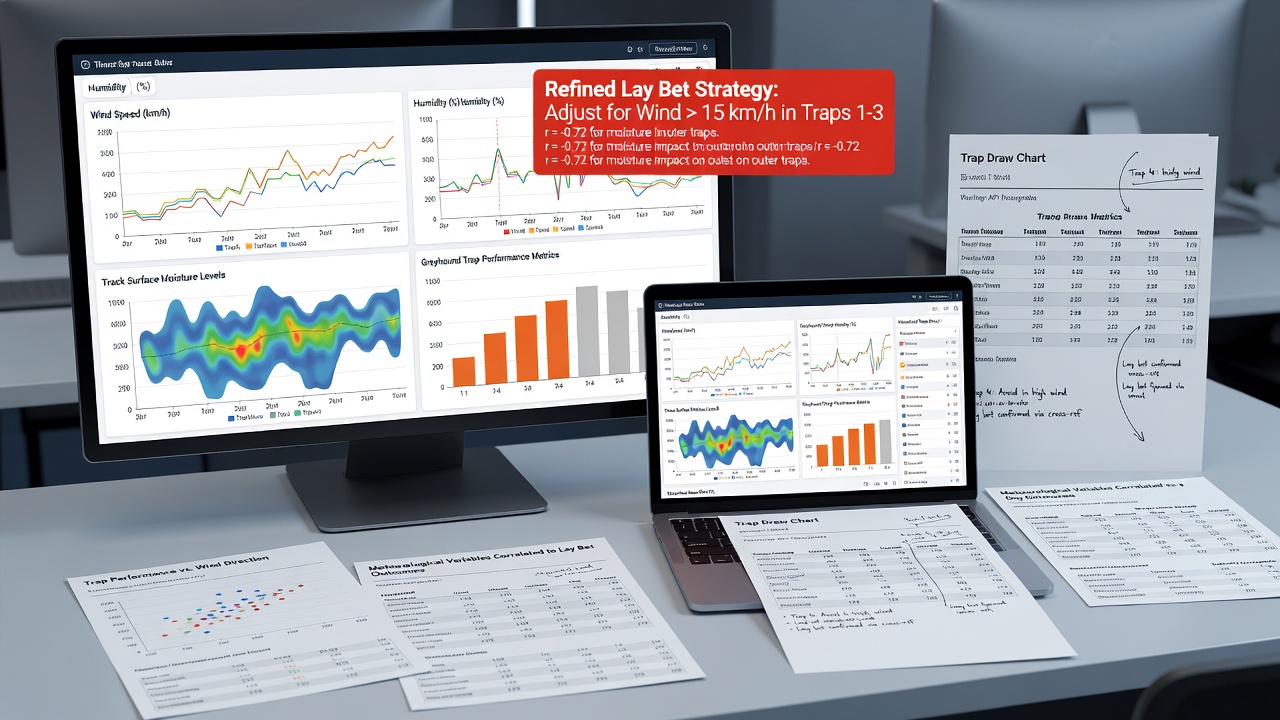
Records indicate that moderate headwinds above 15 kilometers per hour often extend run-up times for dogs in traps one and two when the track runs into the prevailing direction, while crosswinds above 20 kilometers per hour push outer runners off their lines on the first bend. Temperature data further refines the picture: warmer evening air above 18 degrees Celsius tends to preserve early pace, whereas cooler conditions increase the likelihood that early leaders tire before the final straight.
Track maintenance logs add another layer because watering schedules respond to humidity readings, which in turn affect going descriptions. When grounds staff apply extra water following low-humidity afternoons, trap-three and trap-four runners frequently record improved bend speeds compared with historical averages for the same meeting type.
Application to Lay Bet Construction
Lay bettors identify runners whose historical trap metrics degrade under forecast conditions for a given evening. A dog that posts strong trap-one times on dry, still nights may warrant a lay when models predict gusty crosswinds and light rain, because the same runner's bend sectional times lengthen by 0.08 to 0.12 seconds under those parameters. The reverse holds for wide runners that gain when rail bias flattens.
Software tools now ingest live forecasts and historical matrices to generate probability adjustments before each race card finalizes. Those adjustments feed into staking calculators that resize lay exposure according to the strength of the meteorological signal, rather than relying on blanket trap statistics alone.
Examples from August 2026 Meetings
During the first week of August 2026, several evening cards at coastal tracks coincided with incoming Atlantic fronts that delivered sustained winds and intermittent showers after 8 p.m. Performance tables compiled afterward showed trap-five and trap-six greyhounds improving their average margins by 1.4 lengths relative to the prior three weeks, while inside traps posted slower exit speeds. Bettors who cross-referenced the forecast with trap history reduced exposure on rail runners and shifted lay activity toward early-paced favorites drawn inside.
Similar patterns emerged at inland venues where clear skies and falling temperatures created firmer going; outer traps lost their customary advantage and inside runners reclaimed sectional superiority. The datasets allowed pre-meeting models to flag those shifts hours ahead of the first race.
Limitations and Data Quality Considerations
Not every venue maintains identical sensor density, so some meetings require interpolation between the nearest weather station and the track itself. Timing systems also vary in resolution, which can introduce small discrepancies when aligning wind gust peaks with individual trap openings. Analysts therefore apply confidence intervals around each correlation and avoid over-weighting single-race anomalies.
Regulatory bodies in multiple jurisdictions require transparent disclosure of any automated decision support used by professional layers, yet the underlying meteorological and performance records remain publicly accessible through open data portals and racing authority archives.
Conclusion
Cross-referencing meteorological datasets with greyhound trap performance metrics supplies an additional filter for lay bet selections at evening meetings. The method rests on documented correlations between wind, temperature, precipitation, and sectional times rather than subjective judgment. Continued expansion of sensor networks and standardized timing protocols will likely increase the precision of these alignments in future seasons.